
REVIEW · NASHVILLE
Nashville True Crime Walking Guided Tour
Book on Viator →Operated by Nashville True Crime Tours By Mr. E's Crimecast · Bookable on Viator
Crime has a route through Nashville.
This 2-hour guided walking tour takes you past downtown landmarks tied to some of Music City’s most haunting cases, with a guide who keeps the story moving and the details grounded. Two things I really like: the way Mr. E’s Crimecast blends older cases with newer developments, and the fact the tour stays approachable—tight stops, short durations, and an easy pace for a true-crime fix. One thing to consider: you’re walking outside and the subject matter is murder-related, so it’s not a match if you’re looking for light, breezy sightseeing.
You’ll meet near Union Street North, then head to four stops where the guide talks through what happened, what was proven, and what still doesn’t add up neatly. The tour is also set up to respect victims, not turn tragedy into a joke, which is a big part of why it works. Still, it’s a true-crime walk with a moderate walking requirement, so wear comfortable shoes and bring water in warm weather.
In This Review
- Key highlights you’ll feel fast
- Start at Union Street North: what the 2-hour pace really feels like
- Tour basics: $30, mobile ticket, and the “bring your attention” rule
- Stop 1: Tennessee State Capitol and the first murder media frenzy
- Stop 2: Municipal Courthouse and the serial killer brought to justice
- Stop 3: Riverfront Park and the missing student’s last known path
- Stop 4: Printer’s Alley and a TV star’s murder scene
- How Mr. E’s Crimecast keeps you listening (without turning it into a show)
- Value and logistics: why $30 feels fair for this setup
- Who this tour is best for (and who should skip it)
- Should you book Nashville True Crime Walking Guided Tour?
- FAQ
- How much does the Nashville True Crime Walking Guided Tour cost?
- How long is the tour?
- Where does the tour start?
- What stops are included on the tour?
- Is admission included for the stops?
- What language is the tour offered in?
- Is the tour suitable for people with a moderate fitness level?
- Is there a limit on group size?
- What happens if the weather is poor?
- What is the cancellation window?
Key highlights you’ll feel fast

- Small group size (max 20): easier to hear the guide and stay engaged.
- Four major downtown locations: Tennessee State Capitol, Municipal Courthouse, Riverfront Park, Printer’s Alley.
- Storytelling that connects eras: historical crime threads plus more current context.
- A respectful tone: the best kind of spooky, not exploitative.
- Hard-to-google details: the guide shares case specifics that are tougher to find on your own.
- Free admission at each stop: you’re paying for the story, not entry fees.
Start at Union Street North: what the 2-hour pace really feels like
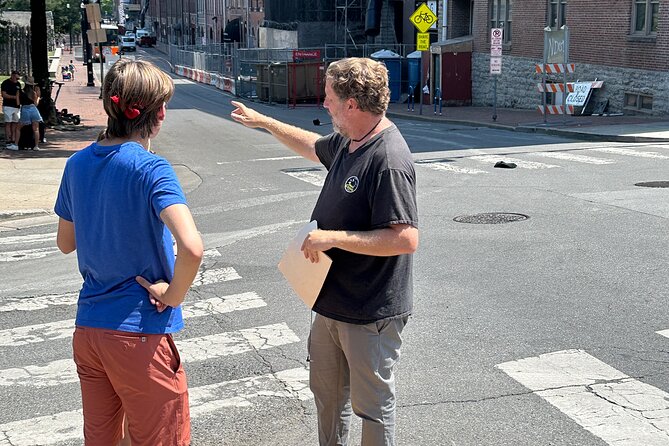
The tour starts at Union Street North (Union St N, Nashville, TN 37201). From there, you’ll walk between four locations that are all in the downtown area, with each stop timed for a focused story. The total time is about 2 hours, and the tour is designed to keep you from feeling like you’re trudging all day.
The pace is “walk but don’t suffer.” That matters because you’re not just seeing buildings—you’re absorbing details. If you’ve ever tried to read crime threads online while also touring a city, you know how messy it gets. This format keeps the narrative in the right order, with enough time at each stop to actually connect what you’re hearing to what you’re looking at.
Group size is capped at 20. That’s a sweet spot for this kind of tour because it helps the guide keep the room attentive. And because it’s a guided walking tour, you don’t have to worry about direction-finding mid-story.
You can also read our reviews of more guided tours in Nashville



Tour basics: $30, mobile ticket, and the “bring your attention” rule
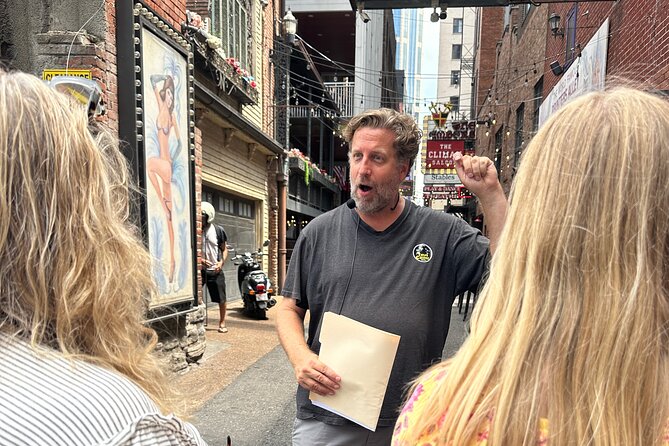
At $30.00 per person, this is priced like a straightforward walking tour, not a premium museum ticket. The best value angle is that the tour includes the professional guide, while the admission tickets for the listed stops are free. So you’re mostly paying for a curated route and a guide who’s done the homework.
You’ll get a mobile ticket, and the tour is offered in English. Service animals are allowed, and the tour is near public transportation, so it’s easy to plug into a day that includes other downtown plans.
One more practical note: this is a real guided experience, not a hop-on audio tour. If you want to get the most out of it, don’t treat it like background noise. You’ll hear a lot more when you stay present for the whole walk.
Stop 1: Tennessee State Capitol and the first murder media frenzy
Your first stop is the Tennessee State Capitol. This is a strong opening because it’s a place that already feels official and public—exactly the right mood for a story about how crime coverage can spread fast.
At this stop, the guide focuses on the first murder media frenzy that rocked Music City. That’s a great angle because it’s not only about the crime itself; it’s about how people reacted, how attention moved, and how public fear and fascination can feed each other.
The time at this stop is about 30 minutes, with free admission. This duration gives the guide room to set the scene and explain the “why it mattered” part of the case. The drawback is simple: if you’re hoping for modern-location thrills only, the Capitol start is more context-heavy than action-heavy.
Tip for this stop: take a moment to look around before the story starts. When you can place the setting in your head, the details stick better.
Stop 2: Municipal Courthouse and the serial killer brought to justice
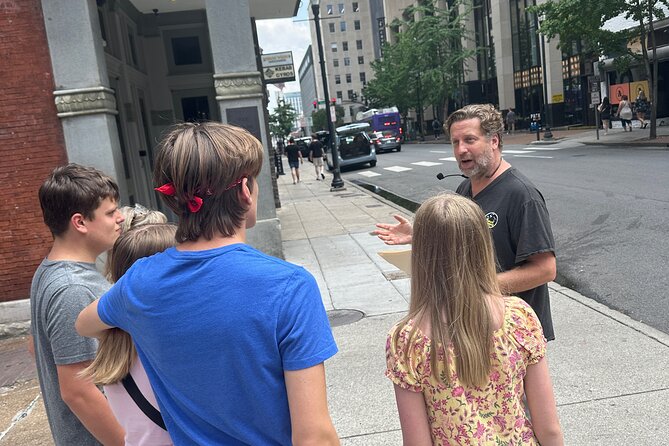
Next is the Municipal Courthouse Nashville TN. If Stop 1 sets the tone about attention and public reaction, this one shifts into the court-and-evidence world.
Here, you’ll learn about a serial killer caught and tried right in Music City. The guide also covers the world-famous detective who brought him to justice. Even without knowing any case details ahead of time, a courthouse stop helps you frame what you’re hearing: the difference between rumors, investigation, and what gets proven.
This stop also runs about 30 minutes and includes free admission. It’s a useful pacing break, too. You’ve had the broad story of media frenzy; now you get a more structured “how the system handled it” perspective.
A consideration: true crime can tempt people into certainty even when facts are incomplete. The tour’s approach (based on what I’ve learned from how Mr. E tells these stories) is to keep questions alive when they deserve to be alive, instead of forcing a neat ending. That can be satisfying for critical thinkers, but it may frustrate you if you want everything wrapped up into one final conclusion.
Stop 3: Riverfront Park and the missing student’s last known path
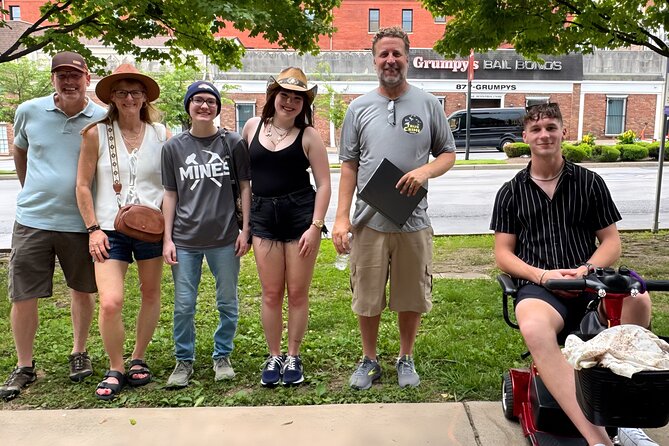
Stop 3 is Riverfront Park. This is where the tone often turns more personal. The guide tells the tragic story of a young college student who went missing, including the path of his last known location.
Seeing a real public place tied to a disappearance does something different than reading about it. The environment becomes part of the story. You start thinking about timing, visibility, how places connect, and how quickly a normal day can turn into a case.
You’ll spend about 30 minutes here, again with free admission. That’s a good amount of time for a “walk the facts” style story: you can absorb the details without rushing past them.
What to watch for: emotional density. Even when presented thoughtfully, this kind of story can hit harder than the headline-driven crime stories online. If you’re sensitive to missing-person narratives, consider whether you want that kind of emotional weight on your schedule.




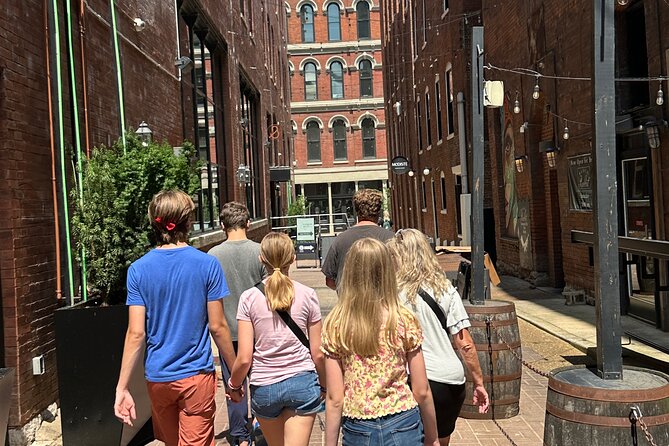
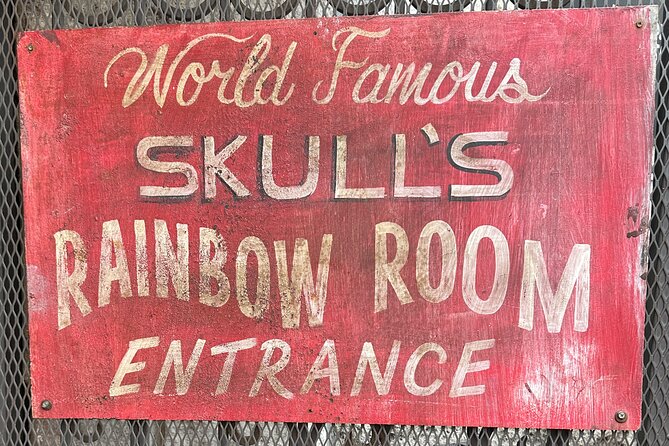
Stop 4: Printer’s Alley and a TV star’s murder scene

Your final stop is Printer’s Alley, tied to the murder of a famous TV star. This is a great ending point because it connects place with pop culture in a way that feels immediate.
At this stop, the guide explains the crime scene details tied to that case, and how a TV show helped solve the murder. That combination can be genuinely fun in the same way a good puzzle is fun—because it’s about information flow, not just violence.
Time here is about 30 minutes, with free admission. This is also where you’ll likely understand why the tour has such strong repeat-fan energy. It’s not only history; it’s the way stories spread through media and how information can lead to resolution.
The one drawback is the same as any final stop: you’ll want to ask questions, but the tour will move on. If there’s a moment you want to sit with, do it early in the stop window, not at the last two minutes.
How Mr. E’s Crimecast keeps you listening (without turning it into a show)
What stands out most is the method behind the telling. The best praise for this tour isn’t about shock value—it’s about research, organization, and pacing. You can feel that when a guide can connect multiple elements without losing the thread.
Mr. E’s style also leans into what’s harder to find on your own. Multiple cases include details that aren’t easy to google, and the tour handles that with a mix of clarity and restraint. That matters, because true crime content can go off the rails fast when it’s built from speculation.
Another big plus: the tour presents what’s known and then points out where questions remain. That critical-thinking approach turns the walk into more than a recap. It becomes a way to think about evidence, narrative, and how truth gets assembled over time.
And yes, it’s also updated. Some cases include newer developments alongside older ones, so you don’t feel like you’re trapped in a history lesson that never changes.
Practical payoff for you: you’ll leave with a mental map of Nashville connected to real cases—plus a better sense of what’s solid fact versus what’s still contested or unclear.
Value and logistics: why $30 feels fair for this setup
Let’s talk value, plain and simple. The price is $30 per person for about 2 hours. With a maximum of 20 travelers, you’re getting a smaller-group guided experience rather than a big bus-style tour.
Also, the stop format helps. Each location gets around 30 minutes, so you’re not getting rushed through four places without meaning. The admission tickets for these stops are free, so you’re not stacking extra costs on top.
The tour also ends back at the meeting point. That’s convenient if you’re connecting to dinner, a second activity, or a show later in the evening.
Where value can wobble is only if you’re expecting a completely lighthearted stroll. The tour is built around serious cases, and if that’s not your mood, no price can fix that. But if you’re open to the subject and want a structured way to learn, it’s a strong deal.
Who this tour is best for (and who should skip it)
This is a great fit if you’re:
- A true-crime fan who likes learning at real locations, not just reading summaries
- The type of person who enjoys both old cases and newer updates
- Someone who prefers a guided story with pacing, instead of trying to self-tour crime facts
You might not love it if:
- You want purely scenic sightseeing with minimal heavy topics
- You’re uncomfortable with murder/missing-person themes
- You hate any outdoor walking on a schedule
Because it takes some walking and your fitness level should be moderate, plan for comfort. Nashville weather can swing, and the tour requires good weather.
Should you book Nashville True Crime Walking Guided Tour?
I’d book it if you want a downtown-focused true-crime experience that feels researched, respectful, and engaging. The strongest selling points are the guide’s approach—sharp storytelling, critical thinking about unanswered questions, and a tone that doesn’t turn victims into props.
It’s also a smart choice for first-timers in Nashville who want something different than the usual music-and-bars routine. You’ll get a real sense of place, and the stories are connected to locations you could easily walk past without learning anything.
Skip it only if your idea of a vacation demands light content and lots of downtime. Otherwise, this is exactly the kind of tour you can do once and keep talking about on the ride to your next stop.
FAQ
How much does the Nashville True Crime Walking Guided Tour cost?
The tour costs $30.00 per person.
How long is the tour?
The tour is about 2 hours.
Where does the tour start?
It starts at Union Street North, Union St N, Nashville, TN 37201.
What stops are included on the tour?
You’ll visit the Tennessee State Capitol, the Municipal Courthouse Nashville TN, Riverfront Park, and Printer’s Alley.
Is admission included for the stops?
Admission tickets for the listed stops are free.
What language is the tour offered in?
The tour is offered in English.
Is the tour suitable for people with a moderate fitness level?
The tour is listed as requiring a moderate physical fitness level.
Is there a limit on group size?
Yes. The tour has a maximum of 20 travelers.
What happens if the weather is poor?
The tour requires good weather. If it’s canceled due to poor weather, you’ll be offered a different date or a full refund.
What is the cancellation window?
You can cancel up to 24 hours in advance for a full refund.
Would you like me to tailor this review into a quick “is it worth it for me?” checklist based on your travel style (serious fan vs casual curious, and how sensitive you are to missing-person or murder stories)?